Education Today Education Today Magazine

Education managers and designers play a crucial role in crafting environments that prioritise wellbeing, productivity, and comfort. Indoor air quality (IAQ) within educational settings is a critical consideration that significantly impacts the health and performance of both students and staff. Those working in the education sector play a crucial role in shaping learning environments that prioritise optimal air quality, ensuring a conducive and healthy atmosphere for academic pursuits.
Research shows that the majority of the UK public (87%) and education leaders (98%) believe that air quality is important in education spaces. With that in mind, in this article, Dyson shares why implementing air purification systems within educational settings should be a priority.
Understanding Indoor Air Quality
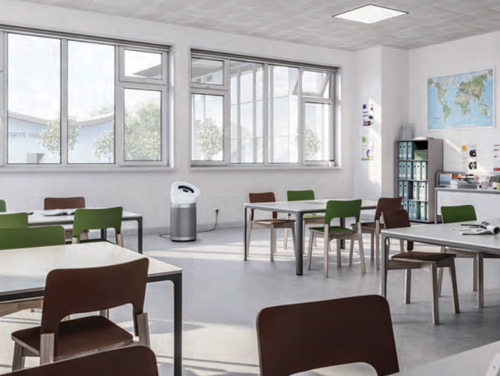
 With people spending up to 90% of their time indoors, indoor air quality is a universal concern that impacts people across all sectors and in any shared space. Pollutants or Volatile Organic Compounds (VOCs) are emitted from numerous sources including fuels, flooring, cleaning products, and even soft furnishings. These micro pollutants are impossible to see but can have an impact on our health, wellbeing and productivity.
Short-term exposure to poor indoor air quality can potentially lead heightened fatigue, difficulty concentrating, and an overall sense of discomfort. Those with respiratory conditions such as asthma may notice an exacerbation of symptoms, including coughing and shortness of breath. Additionally, poor indoor air quality can contribute to the spread of viruses and respiratory infections among occupants.
Global Action Plan, a leading charity, brings attention to the alarming statistic that almost all UK schools are in areas above WHO air pollution limits. The UK government has officially acknowledged poor air quality as the largest environmental risk to public health in the country. This underscores the urgency for educators to prioritise IAQ initiatives in school design and ongoing maintenance.
This data underscores the critical importance of proactively embracing available technologies for air purification in classrooms.
Choosing Technology for Cleaner Educational Environments
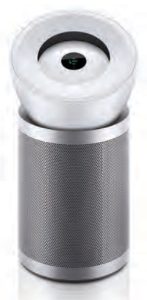
 When decision-makers are considering suitable technology for education spaces, it is essential to consider various features and technologies that are catered to large, shared spaces which have distinct requirements. For example, opting for quiet and powerful purifiers, such as Dyson’s Big + Quiet, are particularly well-suited to the educational environment as they reduce exposure to indoor air pollution, without disruption.
By introducing purification solutions, it is possible to address risks associated with poor indoor air quality, ensuring that students and staff can thrive in an environment that facilitates both health and productivity. A collaborative effort between education managers and designers holds the potential to create spaces that prioritise the wellbeing of all, fostering an optimal learning environment.
To learn more on how to create cleaner, and more hygienic shared spaces across educational spaces, visit Dyson technology’s business hub and book a call:
https://www.dyson.co.uk/commercial/air-treatment