Education Today Education Today Magazine

The SEND reforms set out in Every Child Achieving and Thriving place a clear expectation on schools: earlier identification of need, more consistent in-school support, and a stronger focus on Targeted Support. While the direction of travel is widely supported, the practical challenge for schools is significant. The question facing many schools is how these approaches can be delivered consistently within existing constraints of time, staffing and capacity.
Individual Support Plans
 ISPs are intended to provide a live, evolving record of a pupil’s needs, the support in place, and the expected outcomes of that support. This requirement significantly increases the volume and frequency of structured planning required across schools. What was previously focused on higher-need pupils is now expected to extend to a much wider cohort, with increased emphasis on evidence, parental engagement, and ongoing updates. ISPs must also remain usable tools for teachers, not an additional administrative burden.
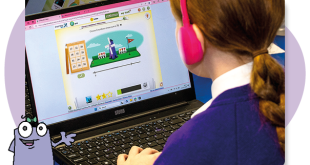
Academy21 translates ISP priorities into Individual Teaching Plans (ITPs), which are co-developed with schools and converted into structured, deliverable learning pathways that form the foundation for our live, adaptive teaching. These plans are continuously informed by engagement and progress data, allowing ISPs to remain active and evidence-based. Thanks to our structured, personalised approach, 93% of students report increased confidence in their learning since joining us.
Targeted support
Targeted support is designed to quickly identify needs and prevent escalation to more intensive specialist support. However, this is also the point at which many schools face the greatest operational pressure.
Pupils requiring targeted support often have multiple overlapping needs, be it anxiety or SEN-related barriers, Emotionally Based School Non-Attendance, or school trauma. Timing is critical. Where intervention is immediate and sustained, there is a realistic opportunity to stabilise engagement.
Online AP can be critical here due to its flexible nature. Providers like Academy21 offer immediate access to structured online provision that can be deployed as soon as need is identified. Targeted Support is implemented without delay, and adjusted over time as engagement develops.
Inclusion bases
Inclusion bases and enhanced resource provision are increasingly central to how schools are operationalising SEND reform. This reflects a wider shift towards earlier, in-school intervention, but it also changes the operational reality of inclusion bases, which are now required to manage fluctuating levels of engagement and readiness to learn.
Structured online learning extends capacity and helps schools manage their on-site AP more effectively. Academy21 is already supporting hundreds of schools in building an effective and sustainable inclusion base, with 70% of educational institutions reporting they are likely or highly likely to use us as part of their inclusion strategy.
Pupil engagement framework
A key development within SEND reform is the growing focus on pupil engagement, including sense of belonging, relationships within school, and early indicators of disengagement from learning. The intention is to move the system away from reacting to absence and towards identifying disconnection earlier through continuous feedback and monitoring.
85% of Academy21 students who previously had zero attendance go on to re-engage with live learning once structured provision is in place, demonstrating how quickly access to education can be restored when barriers are addressed. Engagement is therefore not separate from outcomes, but a precondition for them.
A system built for inclusion must be built for flexibility
 The SEND reforms provide a clear framework for earlier intervention, stronger inclusion and more structured support. However, the determining factor will be whether schools have the capacity to deliver this consistently at the point of need. The challenge is not intent, but implementation, ensuring that support can be deployed quickly, sustained effectively and adapted as needs evolve.
Academy21 works with schools, trusts and local authorities to support this implementation, providing structured, DfE-accredited online provision that enables SEND strategies to move from policy into practice, ensuring pupils remain engaged in education even when internal capacity is under pressure.
Get in touch…
0800 2088210
contact@academy21.co.uk
academy21.co.uk