Education Today Education Today Magazine
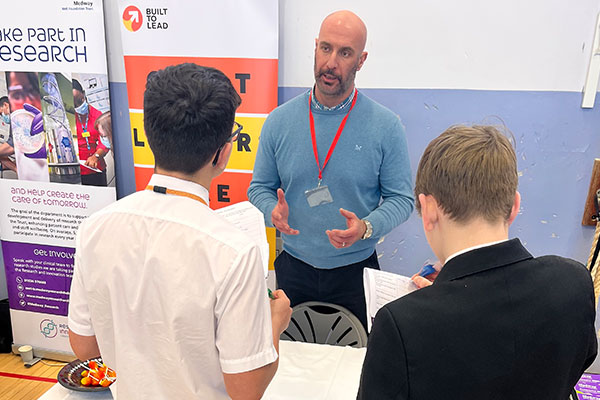
Recently I had the opportunity to return to my former school, Rainham Mark Grammar School, to take part in a careers fair (my first time back in nearly 30 years). I wasn’t there to talk about job titles, industries, or career ladders. Instead, I wanted to talk to the students about Leadership.
That might sound like an unusual focus for a careers event, but the conversations that followed reinforced something I’ve learned repeatedly over the years: Leadership isn’t something that suddenly appears when someone reaches management, it’s a set of behaviours and choices that begin much earlier.
Rather than delivering a talk, or handing out advice, I asked students a simple question. I described a familiar situation a group project where one person isn’t pulling their weight and the deadline is approaching, and then asked what would you do first? And just as importantly what would you be accountable for?
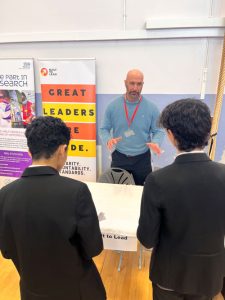 There are no right or wrong answers of course, what mattered was how students thought about responsibility, standards, and ownership. Some focused on fairness, others on protecting the group outcome, others on having the difficult conversation. What quickly became clear for me was that these young people already have some strong instincts about leadership, they just don’t recognise them as such.
One of the most common misconceptions I encounter, both in schools and organisations, is that leadership is about authority, popularity, or position. In reality leadership shows up most clearly when things get uncomfortable, when expectations aren’t being met, when pressure is building, or when someone needs to step forward and take accountability for the outcome.
That’s why I deliberately kept the interaction simple. No slides, no worksheets, no “tips for success”. Just a short conversation that encouraged students to pause, think and articulate how they would act when faced with pressure. Many were surprised by how seriously they took the question (and by how much they already knew).
Leaving the fair, I was struck by how capable the students already were when given the space to think. Leadership doesn’t need to be taught as a subject reserved for later life, it can start with simple questions, asked early, that help young people recognise that responsibility is not a burden, it’s a choice.
And that is one of the most valuable lessons we can offer, long before the first job title ever appears.
Author bio
 Keith Patterson is a Leadership Advisor and former Managing Director with over 15 years of senior leadership experience across various industries. Now, he is the founder of Built to Lead, where he works with organisations and educators to develop leadership capability focused on clarity, accountability, standards, and growth. Keith was a former pupil of Rainham Mark Grammar School in Kent.